
Laser Vision Correction Surgery: Types, Steps and Results
Laser Vision Correction Surgery: Types, Steps and Results
Glasses and contact lenses can be inconvenient for many people. They may get dirty, become uncomfortable, or make daily activities harder. This is why laser vision correction surgery has become one of the most popular solutions for improving eyesight and reducing dependence on glasses.
What Is the Goal of Laser Vision Correction Surgery?
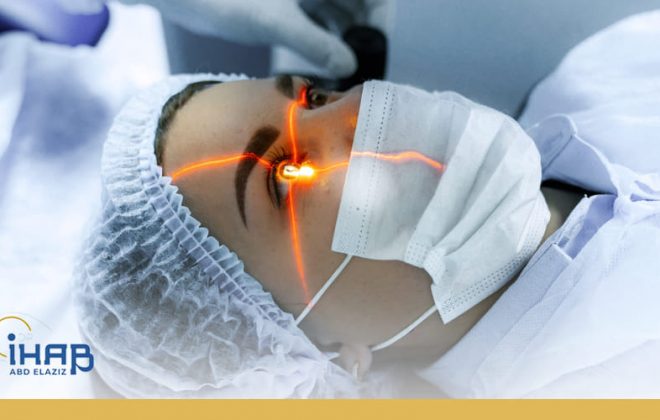
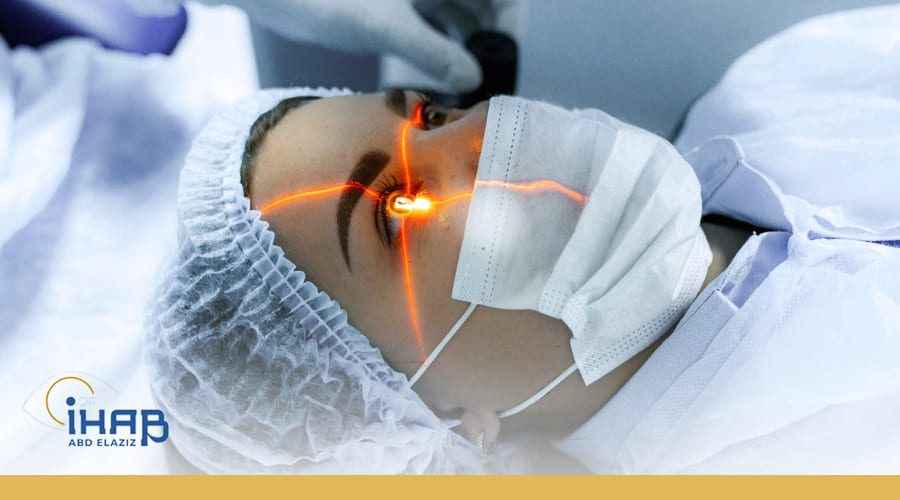
Laser vision correction surgery aims to reshape the cornea so that light focuses properly on the retina. This helps treat common refractive errors such as nearsightedness, farsightedness, and astigmatism.
- Nearsightedness: distant objects appear blurry while near objects are clear.
- Farsightedness: near objects appear blurry while distant objects may be clearer.
- Astigmatism: vision becomes distorted due to irregular corneal curvature.
Read also: Difference Between Astigmatism and Poor Vision
Types of Laser Vision Correction Surgery
- Traditional LASIK
- PRK / Surface laser treatment
- Femto LASIK
- Femto SMILE
Read also: Risks of Vision Correction Surgery
Who Is a Good Candidate for Laser Vision Correction?
Before undergoing laser vision correction surgery, the patient must meet certain conditions:
General Conditions
- The eye should be free from serious diseases such as keratoconus.
- The vision prescription should be stable for at least one year.
Specific Conditions
- The patient should usually be over 18 years old.
- Corneal thickness must be suitable for the selected laser technique.
- Femto SMILE may be suitable for some patients with thinner corneas.
Preparation Before LASIK Surgery
- Avoid wearing contact lenses for about two weeks before surgery.
- Avoid facial cosmetics for two days before the procedure.
- Inform the doctor about any medications you use.
- Complete the required eye examinations before surgery.
Required Eye Tests Before Surgery
- Visual acuity test
- Corneal topography
- Eye pressure measurement
- Corneal thickness measurement
How Is Laser Vision Correction Surgery Performed?
Traditional LASIK
- The eye is numbed using anesthetic drops.
- A thin flap is created in the cornea.
- The inner corneal tissue is reshaped using excimer laser.
- The flap is returned to its original position.
PRK / Surface Laser Treatment
- The eye is numbed with drops.
- The surface epithelial layer is removed.
- The laser reshapes the cornea.
- A protective contact lens is placed temporarily.
Femto LASIK
- The corneal flap is created using femtosecond laser.
- Excimer laser reshapes the cornea.
- The flap is placed back naturally.
Femto SMILE
- The inner corneal layers are separated using laser.
- A small incision is made in the cornea.
- A small tissue lenticule is removed to correct vision.
How Long Does Laser Vision Correction Surgery Take?
Laser vision correction surgery usually takes around 10 minutes and rarely exceeds 20 minutes in most cases.
Is Laser Vision Correction Surgery Painful?
No. The procedure is usually painless because anesthetic eye drops are used before surgery.
Possible Side Effects After Laser Vision Correction
Laser vision correction is generally successful, but temporary side effects may appear after surgery:
- Dry eyes
- Light sensitivity
- Eye redness
- Double vision
These symptoms usually improve within a few days. Rare complications may include regression of vision or serious vision problems.
When Does Vision Improve After Laser Vision Correction?
Vision usually improves gradually after LASIK surgery and may fully stabilize within 6 weeks to 3 months.
Read also: Astigmatism
Important Tips After LASIK Surgery
- Use the prescribed eye drops regularly.
- Avoid getting water into the eye.
- Do not rub your eyes.
- Avoid heat exposure during the first week.
- Wear sunglasses when going outside.
Conclusion
Laser vision correction surgery is an effective option for treating refractive errors and reducing dependence on glasses or contact lenses. A detailed eye examination is essential to determine the most suitable technique for each patient.
Frequently Asked Questions
How long does LASIK surgery take?
It usually takes around 10 minutes and rarely exceeds 20 minutes.
Is laser vision correction painful?
No, the procedure is performed using anesthetic eye drops and is usually painless.
When does vision stabilize after LASIK?
Vision improves gradually and usually stabilizes within 6 weeks to 3 months.